LIFELONG LEARNING IN A KNOWLEDGE SOCIETY
Learning is PurposefulMost people have fairly definite ideas about what we want to do and achieve. Our goals sometimes are short term, involving a matter of days or weeks. On the other hand, our goals may be carefully planned for a career or a lifetime. We each have specific intentions and goals. Our individual needs and attitudes may determine what we learn. In the process of learning, our goals are of paramount significance.
Definition of Learning
To learn is to acquire knowledge or skill. Learning also may involve a change in attitude or behavior. The ability to learn is one of the most outstanding human characteristics. Learning occurs continuously throughout a person's lifetime. To define learning, it is necessary to analyze what happens to the individual. For example, an individual's way of perceiving, thinking, feeling, and doing may change as a result of a learning experience. Thus, learning can be defined as a change in behavior as a result of experience. This can be physical and overt, or it may involve complex intellectual or attitudinal changes which affect behavior in more subtle ways. In spite of numerous theories and contrasting views, psychologists generally agree on many common characteristics of learning.
 Learning is a Result of Experience
All learning is by experience, but learning takes place in different forms and in varying degrees of richness and depth. For instance, some experiences involve the whole person while others may be based only on hearing and memory. It seems clear enough that the learning of a physical skill requires actual experience in performing that skill. Mental habits are also learned through practice. In sound judgement and in developing decision-making skills, we need learning experiences that involve knowledge of general principles and require the use of judgment in salving realistic problems.
Learning is an Active Process
Learning is a process of changing behavior, clearly that process must be an active one.

Definition of Learning
To learn is to acquire knowledge or skill. Learning also may involve a change in attitude or behavior. The ability to learn is one of the most outstanding human characteristics. Learning occurs continuously throughout a person's lifetime. To define learning, it is necessary to analyze what happens to the individual. For example, an individual's way of perceiving, thinking, feeling, and doing may change as a result of a learning experience. Thus, learning can be defined as a change in behavior as a result of experience. This can be physical and overt, or it may involve complex intellectual or attitudinal changes which affect behavior in more subtle ways. In spite of numerous theories and contrasting views, psychologists generally agree on many common characteristics of learning.
 Learning is a Result of Experience
All learning is by experience, but learning takes place in different forms and in varying degrees of richness and depth. For instance, some experiences involve the whole person while others may be based only on hearing and memory. It seems clear enough that the learning of a physical skill requires actual experience in performing that skill. Mental habits are also learned through practice. In sound judgement and in developing decision-making skills, we need learning experiences that involve knowledge of general principles and require the use of judgment in salving realistic problems.
Learning is an Active Process
Learning is a process of changing behavior, clearly that process must be an active one.
 MotivationMotivation is probably the dominant force which governs our progress and ability to learn. Motivation may be negative or positive, tangible or intangible, subtle and difficult to identify, or it may be obvious. Negative motivation may engender fear, and be perceived by us as a threat. While negative motivation may be useful in certain situations, characteristically it is not as effective in promoting efficient learning as positive motivation. Positive motivation is provided by the promise or achievement of rewards. These rewards may be personal or social; they may involve financial gain, satisfaction of the self-concept, or public recognition. Motivation which can be used to advantage by the includes of the desired for personal gain, the desire for personal comfort or security, the desire for group approval, and the achievement of a favorable self-image. The attractive features of the activity to be learned also can be a strong motivational factor. We are anxious to learn skills which may be used to our advantage. And if we understand that each task will be useful in preparing for future activities, we will be more willing to pursue learning in lifelong.
Learning in a life long process
 Lifelong learning is a broad, generic term that is difficult to define with specificity. Its overlap, or its interchangeable use, with other closely related concepts, such as lifelong, permanent, recurrent, continuing, or adult education; learning organizations; and the learning society (society in which learning is pervasive), makes this even more true. For some it includes learning from childhood and early schooling, while others treat it as in terms of the adult learning process. It has grown to a global concept, with differing manifestations that vary with national political and economic priorities, and with cultural and social value systems.
Lifelong learning is the development of human potential through a continuously supportive process which stimulates and empowers individuals to acquire all the knowledge, values, skills, and understanding what we will require throughout our lifetimes and to apply them with confidence, creativity and enjoyment in all roles, circumstances, and environments. The definition includes several basic elements of the lifelong learning ideal such as:
(1) a belief in the idea of lifetime human potential and the possibility of its realization;
(2) the efforts to facilitate achievement of the skills, knowledge, and aptitudes necessary for a successful life;
(3) a recognition that learning takes place in many modes and places, including formal educational institutions and non formal experiences such as employment, military service, and civic participation and informal self-initiated activity; and
(4) the need to provide integrated supportive systems adapted to individual differences which encourage and facilitate individuals to achieve mastery and self-direction. Society should make these systems available to learners with flexibility and diversity.
 Why do we need to learn through out our whole life?
Why do we need to get ourselves engaged in a lifelong learning? Why can’t the learning process only starts and ends in school days only? What is so important about learning for a lifetime? What sweetness does the fruit bears out of long life learning? We need to ask ourselves and try to get some practical views or answers on those statements imposed below and relates it to the topic here.
Ø The new millennium requires new vision and understanding of learning.
Ø Transition from Industrial Society to Information and Knowledge Society has its impacts on social, economic and cultural aspects of life.
Ø What are the impacts of the transition to Information Age regarding:
o personal fulfilment
o citizenship
o employability
Ø What are the implications of this transition on learning?

Ø What is the vision of future learning?
Ø How can we be prepared for an Information Age and a Knowledge Society?
Ø In a technology-enabled, lifelong learning environment, digital literacy (e-skills), scientific literacy, cultural literacy, in addition to key competencies, are the critical perquisites for access, participation, and learning to live together in peace.
Ø With the advent of “e-learning,” some believed that the panacea for learning had been discovered. But without a holistic approach to learning, technology by itself can’t bring any change.
 In a world of active lifelong learning, an individual’s skills portfolio will be built and documented based on a mix of real-life experiences, achievements, and formal learning certifications. While classroom-based learning will continue, especially with early phases of education, it will play a decreased role during an individual lifetime.
In knowledge society, individuals of every age and background are invited to join in logical analysis, technical dissertations, rich and wide knowledge of diverse subject matters. “Intellectual activity is anywhere and everywhere, whether at the frontier of knowledge or in a third-grade class-room.”
Lifelong Learning
A cradle to grave process designed to provide any citizen with a constantly updated personal and professional development. A tools which enables us to face change, to adapt to the requirements of the labour market, to take responsibility for our own life, to attain personal fulfilment and to assume the responsiveness of an active citizen.
 Knowledge SocietyIs a society that creates, shares, and uses knowledge for the prosperity and wellbeing of its people. Is what we should be seeking to build in the 21st century through networking, and acquisition of higher levels cognitive skill?
New Approaches to Knowledge

The new approach will strike a better balance between purely formal knowledge, applied knowledge and meta-knowledge. At the present time knowledge is conveyed through speech and the written word. In the future, there will be an extraordinary diversification of its representations, particularly through the new information and communications technology (ICT). Cross cutting themes, interdisciplinary approach will become more important than disciplinary one.
 Knowledge will be inclusive and it will involve “higher-level” of cognitive domain via:
Ø analyses
Ø synthesis
Ø evaluation
Learners will be more closely associated with the creation of knowledge and more involved in the learning process.
Learning in Knowledge SocietyImplies to differentiate between:
Ø superficial learning (reception/understanding/application)
Ø deep learning (analysis/synthesis/evaluation)
Implies to construct knowledge, to make meaning, and continuous improvement of mental representation.
Ø Constructivist’s definition of learning
Ø Learning is the process of adjusting our mental models to accommodate new experiences.
Ø Learning is a search for meaning.
Ø Meaning making requires wholes as well as parts.
Ø Parts must be understood in the context of wholes.
Therefore, the learning process focuses on primary concepts and not the isolated facts. The pillars of lifelong learning in 21st century are:-
Ø Learning to know
Ø Learning to do
Ø Learning to be
Ø Learning to live together
Ø Learning to know by mastering cognitive skills & collaboration.
Ø Learning to do by mastering skills & production.
Ø Learning to be by admitting multiple intelligent (MI) and sustainable human development.
Ø Learning to live together by dialogue and tolerance.
While, the main objectives of lifelong learning can be as below:-
Ø Personal fulfilment and development throughout life (cultural capital)
Ø Active citizenship and inclusion (social capital)
Ø Employability (human capital)
Ø Lifelong learning and Competencies
 There are three broad types of competencies to be acquired through lifelong learning process. They are:
Ø Communicative competencies: the ability to speak, listen, write, negotiate, and mediate.
Ø Analytical competencies: the ability to operate within systems of formal logic, to create models, and to display a sociological imagination.
Ø Personal competencies - the ability to display “emotional balance,” to accept diversity, to tolerate.
Key competencies
The key competencies mentioned above are neither school nor university topics, but are acquired in social groups or in the family. These competencies could be considered as tangible contribution to the lifelong learning process and to the construction of a knowledge–based society.
Ø Key competencies enable people to pursue individual objectives in a life driven by personal interests, aspirations, and the desire to continue learning throughout life (cultural capital).
Ø Key competencies allow everybody to participate as an active citizen in society (social capital).
Ø Key competencies upraise the capacity of each and every person to obtain a decent job in the labour market (human capital).
Dimensions of a Knowledge Society
The three specific dimensions of knowledge society are:
Ø The political dimension
Ø The operational dimension
Ø The dimension related to the development of Human Beings
The political dimension implies developing a “learning culture” & “learning spaces” in civil society and in a work place.
The operational dimension implies all players in the lifelong learning process (institutions, NGO’s, companies, trade- unions, education and training authorities, practitioners, municipalities, local communities, museums,…) in order to build strategic lifelong learning partnerships and networks to analyze learning requirements and remove barriers to access to learning.
The dimension related to the development of human beings is the heart of the matter, since it implies a focus on people and citizens rather than abstract terms, such as “human resources” or “end-users.”
 Best GLOBAL practices in lifelong learning
The best innovative practices in a global community are categorized under the following factors:
Ø Process-oriented innovation
Ø Goal-oriented innovation
Ø Context-oriented innovation
Implications of best innovative practices in lifelong learning
Ø Process-oriented innovation implies development of new methods, tools, or approaches, or improvement of existing methods.
Ø Goal-oriented innovation implies formulation of new objectives. For example, active involvement of local communities in the development of basic competencies.
Ø Context-oriented innovation is concerned with system(s) development and implies political and institutional structures and holistic approaches to integrate to sustainable human development.
Priorities for Actions in Lifelong Learning Valuing learning by, for example, developing tools for assessing competencies and methodologies. Information guidance and counselling are actions taken by orienting people to manage their knowledge. Investing time and money in learning by collaboration between public & private bodies are also part of essential actions in long life learning. Bringing together learners and learning opportunities by showing how “normal” instruments such as TV, popular music and theatre, rituals, arts, books and reading can be used as powerful levers for inclusion through lifelong learning. Innovative and critical pedagogy by adaptability to contexts and constructing knowledge through Constructive socio-cultural and holistic approaches to learning are too part of the practical actions related to life long learning.
 Knowledge management: from lifelong employment to lifelong learning
Knowledge management is often thought of as a process by which an organization gets its staff to share their knowledge for the benefit of the organization. Of equal importance to the success of knowledge management is how an organization shares knowledge for the benefit of staff.
The traditional organization made a promise to its staff: Work hard, show talent, and you will have a long and progressive career with us. Downsizing, outsourcing, and a general environment of rapid change, has meant that this promise is less common.
The response of many staff is to no longer expect lifelong employment. In fact, to stay a long time with a particular organization is now seen in a negative light by many people. They want to stay fresh and move on before they are moved out.
The increase in interest in the discipline of knowledge management finds some of its roots in the decline of the lifelong employment promise. The organization sees itself in danger of becoming a knowledge sieve, with knowledgeable staff continuously leaving, bringing their knowledge with them. A key question of knowledge management is: How do we tap this knowledge before it flows away.
Naturally, many staff have taken a cynical view. It looks to them that knowledge management initiatives are a way of draining knowledge from them. Some believe that once their best knowledge has been sucked out, they become even more dispensable.
The way to create a positive and realistic environment is to answer the question: What's in it for me? If you take away the promise of lifelong employment, what do you replace it with? Lifelong learning.
 Lifelong learning is a direct response to the decline in lifelong employment. The age of lifelong employment was reflected by gradual change and a formal education for a fixed period that, by and large, lasted you through your career.
The age of lifelong learning is reflected by rapid change and the need to constantly update your skills. Rapid change has brought with it a tremendous rise in complexity. The emergence of the Internet combines access to vast quantities of information with powerful communication and collaboration tools.
Knowledge workers, those who get paid to think, live in a giant network that is constantly in flux. The opposite of a network is an individual. Hoarding of information is a natural defensive reaction, but it doesn't work if you want to succeed in a network. In an Internet-driven economy, it simply pays to share. Getting connected and sharing is one of the surest ways to become a lifelong learner.
The organization can offer a new set of promises to the knowledge worker. Among those set of promises are:-:
Ø Our intranet will be full of useful things that will help us learn smarter and faster.
Ø Those who share and collaborate will be rewarded. The more quality knowledge we share the more our career will progress.
Ø Because everyone in this organization shares, our collective knowledge is a powerful resource.
Ø We will be offered with opportunities to publish and promote our best ideas. This will enhance our reputation.
Ø In essence, we will also be offered a lifelong learning university. We will hence be provided with the tools, content and environment that could makes learning a form of sharing and sharing a form of learning.
 Education is life
The notion of learning through life is hardly new, however, with the development of a self-consciously 'adult education' came the view that education should be lifelong. Adult education must not be regarded as a luxury for a few exceptional persons here and there, nor as a thing which concerns only a short span of early manhood, but that adult education is a permanent national necessity, an inseparable aspect of citizenship, and therefore should be both universal and lifelong.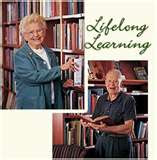
1. Education is life: 'not merely preparation for an unknown kind of future living... The whole of life is learning, therefore education can have no endings. This new venture is called adult education not because it is confined to adults but because adulthood, maturity, defines its limits...'
2. Adult education should be non-vocational: 'Education conceived as a process coterminous with life revolves about non-vocational ideals... adult education more accurately defined begins where vocational education leaves off. Its purpose is to put meaning into the whole of life'.
3. We should start with situations not subjects: 'The approach, will be via the route of situations, not subjects. In conventional education the student is required to adjust himself to an established curriculum; in adult education the curriculum is built around the student's needs and interests'.
4. We must use the learner's experience: 'The resource of highest value in adult education is the learner's experience, in tact that all genuine education will keep doing and thinking together'.
It is not only that education carries on throughout life, but it is also part of living. It requires a shift in our thinking about the fundamental organizational unit of education, from the school, an institution where learning is organized, defined and contained, to the learner, an intelligent agent with the potential to learn from any and all of her encounters with the world around us. There has been a fundamental shift in the behaviour of 'ordinary citizens', 'who increasingly regard the day-to-day practice of adult learning as routine, perhaps so routine that they give it little explicit attention'. Economic, social and cultural changes mean that many now live in 'knowledge' or 'informational societies' that have strong individualizing tendencies and a requirement for permanent learning. As a result, many adults now take part in organized learning throughout their lifespan; that the post-school system is populated by adults as well as by young people; and that 'non-formal' learning permeates daily life and is valued. Typical of the last of these has been a substantial increase in activities such as short residential courses, study tours, fitness centres, sports clubs, heritage centres, self-help therapy manuals, management gurus, electronic networks and self-instructional videos.
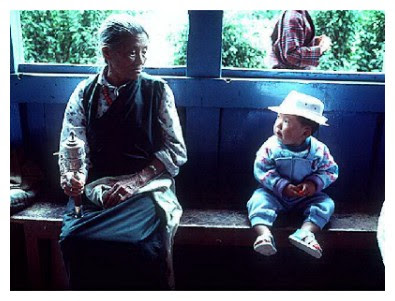 The new adult learning is part of a much broader process. As individuals come to rely less on traditional institutions and the authority figures associated with us such as religious leaders, parents and aristocracy, etc in order to guide our behaviour, so we become more self-directed. At least in principle, we can select from a variety of possible role-models; traditional role models certainly do not disappear (indeed, they are an important if little-understood resource for fundamentalist movements), but to select any role model requires that individuals face up to an increasing range of biographical options. Changes in work organization and management (so called 'post-Fordism' involving flatter organizations, multi-skilled and adaptable labour forces, and flexible production), married to a focus on markets, consumption and lifestyle, has certainly drawn policy makers to the rhetoric of lifelong learning.
A knowledge based society is a promising and challenging Global scenario with the advent of ICT in the 21st century. It carries both opportunities for personal advancement and the threat of being ‘left behind.” Opportunities provided to citizens through lifelong learning are a potential tool for empowerment. As pro-active lifelong learners we need to be equipped with new competencies as we construct knowledge personally through social processes and culture. To be equipped with the key competencies for lifelong learning in a knowledge society could be considered as a right and obligation of every human being. It is concluded that, it is a high time to consider lifelong learning as a moral duty and/or ethical value of the Citizen of the world.
Ø Constructivist’s definition of learning

Ø Learning is the process of adjusting our mental models to accommodate new experiences.
Ø Learning is a search for meaning.
Ø Meaning making requires wholes as well as parts.
Ø Parts must be understood in the context of wholes.
Therefore, the learning process focuses on primary concepts and not the isolated facts. The pillars of lifelong learning in 21st century are:-
Ø Learning to know
Ø Learning to do
Ø Learning to be
Ø Learning to live together
Ø Learning to know by mastering cognitive skills & collaboration.
Ø Learning to do by mastering skills & production.
Ø Learning to be by admitting multiple intelligent (MI) and sustainable human development.
Ø Learning to live together by dialogue and tolerance.
While, the main objectives of lifelong learning can be as below:-
Ø Personal fulfilment and development throughout life (cultural capital)
Ø Active citizenship and inclusion (social capital)
Ø Employability (human capital)
Ø Lifelong learning and Competencies
 There are three broad types of competencies to be acquired through lifelong learning process. They are:
Ø Communicative competencies: the ability to speak, listen, write, negotiate, and mediate.
Ø Analytical competencies: the ability to operate within systems of formal logic, to create models, and to display a sociological imagination.
Ø Personal competencies - the ability to display “emotional balance,” to accept diversity, to tolerate.
Key competencies
The key competencies mentioned above are neither school nor university topics, but are acquired in social groups or in the family. These competencies could be considered as tangible contribution to the lifelong learning process and to the construction of a knowledge–based society.
Ø Key competencies enable people to pursue individual objectives in a life driven by personal interests, aspirations, and the desire to continue learning throughout life (cultural capital).
Ø Key competencies allow everybody to participate as an active citizen in society (social capital).
Ø Key competencies upraise the capacity of each and every person to obtain a decent job in the labour market (human capital).
Dimensions of a Knowledge Society

The three specific dimensions of knowledge society are:
Ø The political dimension
Ø The operational dimension
Ø The dimension related to the development of Human Beings
The political dimension implies developing a “learning culture” & “learning spaces” in civil society and in a work place.
The operational dimension implies all players in the lifelong learning process (institutions, NGO’s, companies, trade- unions, education and training authorities, practitioners, municipalities, local communities, museums,…) in order to build strategic lifelong learning partnerships and networks to analyze learning requirements and remove barriers to access to learning.
The dimension related to the development of human beings is the heart of the matter, since it implies a focus on people and citizens rather than abstract terms, such as “human resources” or “end-users.”
 Best GLOBAL practices in lifelong learning
The best innovative practices in a global community are categorized under the following factors:
Ø Process-oriented innovation
Ø Goal-oriented innovation
Ø Context-oriented innovation
Implications of best innovative practices in lifelong learning
Ø Process-oriented innovation implies development of new methods, tools, or approaches, or improvement of existing methods.
Ø Goal-oriented innovation implies formulation of new objectives. For example, active involvement of local communities in the development of basic competencies.
Ø Context-oriented innovation is concerned with system(s) development and implies political and institutional structures and holistic approaches to integrate to sustainable human development.
Priorities for Actions in Lifelong Learning
 Valuing learning by, for example, developing tools for assessing competencies and methodologies. Information guidance and counselling are actions taken by orienting people to manage their knowledge. Investing time and money in learning by collaboration between public & private bodies are also part of essential actions in long life learning. Bringing together learners and learning opportunities by showing how “normal” instruments such as TV, popular music and theatre, rituals, arts, books and reading can be used as powerful levers for inclusion through lifelong learning. Innovative and critical pedagogy by adaptability to contexts and constructing knowledge through Constructive socio-cultural and holistic approaches to learning are too part of the practical actions related to life long learning.
 Knowledge management: from lifelong employment to lifelong learning
Knowledge management is often thought of as a process by which an organization gets its staff to share their knowledge for the benefit of the organization. Of equal importance to the success of knowledge management is how an organization shares knowledge for the benefit of staff.
The traditional organization made a promise to its staff: Work hard, show talent, and you will have a long and progressive career with us. Downsizing, outsourcing, and a general environment of rapid change, has meant that this promise is less common.
The response of many staff is to no longer expect lifelong employment. In fact, to stay a long time with a particular organization is now seen in a negative light by many people. They want to stay fresh and move on before they are moved out.

The increase in interest in the discipline of knowledge management finds some of its roots in the decline of the lifelong employment promise. The organization sees itself in danger of becoming a knowledge sieve, with knowledgeable staff continuously leaving, bringing their knowledge with them. A key question of knowledge management is: How do we tap this knowledge before it flows away.
Naturally, many staff have taken a cynical view. It looks to them that knowledge management initiatives are a way of draining knowledge from them. Some believe that once their best knowledge has been sucked out, they become even more dispensable.
The way to create a positive and realistic environment is to answer the question: What's in it for me? If you take away the promise of lifelong employment, what do you replace it with? Lifelong learning.
 Lifelong learning is a direct response to the decline in lifelong employment. The age of lifelong employment was reflected by gradual change and a formal education for a fixed period that, by and large, lasted you through your career.
The age of lifelong learning is reflected by rapid change and the need to constantly update your skills. Rapid change has brought with it a tremendous rise in complexity. The emergence of the Internet combines access to vast quantities of information with powerful communication and collaboration tools.
Knowledge workers, those who get paid to think, live in a giant network that is constantly in flux.
 The opposite of a network is an individual. Hoarding of information is a natural defensive reaction, but it doesn't work if you want to succeed in a network. In an Internet-driven economy, it simply pays to share. Getting connected and sharing is one of the surest ways to become a lifelong learner.
The organization can offer a new set of promises to the knowledge worker. Among those set of promises are:-:
Ø Our intranet will be full of useful things that will help us learn smarter and faster.
Ø Those who share and collaborate will be rewarded. The more quality knowledge we share the more our career will progress.
Ø Because everyone in this organization shares, our collective knowledge is a powerful resource.
Ø We will be offered with opportunities to publish and promote our best ideas. This will enhance our reputation.
Ø In essence, we will also be offered a lifelong learning university. We will hence be provided with the tools, content and environment that could makes learning a form of sharing and sharing a form of learning.
Education is lifeThe notion of learning through life is hardly new, however, with the development of a self-consciously 'adult education' came the view that education should be lifelong. Adult education must not be regarded as a luxury for a few exceptional persons here and there, nor as a thing which concerns only a short span of early manhood, but that adult education is a permanent national necessity, an inseparable aspect of citizenship, and therefore should be both universal and lifelong.

1. Education is life: 'not merely preparation for an unknown kind of future living... The whole of life is learning, therefore education can have no endings. This new venture is called adult education not because it is confined to adults but because adulthood, maturity, defines its limits...'
2. Adult education should be non-vocational: 'Education conceived as a process coterminous with life revolves about non-vocational ideals... adult education more accurately defined begins where vocational education leaves off. Its purpose is to put meaning into the whole of life'.
3. We should start with situations not subjects: 'The approach, will be via the route of situations, not subjects. In conventional education the student is required to adjust himself to an established curriculum; in adult education the curriculum is built around the student's needs and interests'.
4. We must use the learner's experience: 'The resource of highest value in adult education is the learner's experience, in tact that all genuine education will keep doing and thinking together'.
It is not only that education carries on throughout life, but it is also part of living. It requires a shift in our thinking about the fundamental organizational unit of education, from the school, an institution where learning is organized, defined and contained, to the learner, an intelligent agent with the potential to learn from any and all of her encounters with the world around us. There has been a fundamental shift in the behaviour of 'ordinary citizens', 'who increasingly regard the day-to-day practice of adult learning as routine, perhaps so routine that they give it little explicit attention'. Economic, social and cultural changes mean that many now live in 'knowledge' or 'informational societies' that have strong individualizing tendencies and a requirement for permanent learning. As a result, many adults now take part in organized learning throughout their lifespan; that the post-school system is populated by adults as well as by young people; and that 'non-formal' learning permeates daily life and is valued. Typical of the last of these has been a substantial increase in activities such as short residential courses, study tours, fitness centres, sports clubs, heritage centres, self-help therapy manuals, management gurus, electronic networks and self-instructional videos.
 The new adult learning is part of a much broader process. As individuals come to rely less on traditional institutions and the authority figures associated with us such as religious leaders, parents and aristocracy, etc in order to guide our behaviour, so we become more self-directed. At least in principle, we can select from a variety of possible role-models; traditional role models certainly do not disappear (indeed, they are an important if little-understood resource for fundamentalist movements), but to select any role model requires that individuals face up to an increasing range of biographical options. Changes in work organization and management (so called 'post-Fordism' involving flatter organizations, multi-skilled and adaptable labour forces, and flexible production), married to a focus on markets, consumption and lifestyle, has certainly drawn policy makers to the rhetoric of lifelong learning.
 A knowledge based society is a promising and challenging Global scenario with the advent of ICT in the 21st century. It carries both opportunities for personal advancement and the threat of being ‘left behind.” Opportunities provided to citizens through lifelong learning are a potential tool for empowerment. As pro-active lifelong learners we need to be equipped with new competencies as we construct knowledge personally through social processes and culture. To be equipped with the key competencies for lifelong learning in a knowledge society could be considered as a right and obligation of every human being. It is concluded that, it is a high time to consider lifelong learning as a moral duty and/or ethical value of the Citizen of the world.
I never stop learning myself...as the more you've learn yet the more you want to know.
Its the blessing by the Great Creator to have granted us with the world & life as our learning table & resources.
All we have to do is just learn to be good by it...with it ...and at it....so to make the good benefit and return for the mankind.


 Make a Heart that Never Breaks..
 ALLAH did not promise that life would be easy...





 Change is Inevitable, Growth Is Optional!


 Every day you become more aware of your abilities and recognize that opportunities to stretch your capabilities are limitless. You desire change, growth, and challenge, and a healthy self-esteem provides the energy.


 But peak performance never comes from doing it the safe way. It comes from putting everything you’ve got into your dream, being willing to fall flat on your face and then getting up and doing it again. For that, you need supporters. And you need to be surrounding yourself with the kind that push you to keep great thinking on track.
 Peak Performers has been at the forefront of helping organisations and their employees achieve accelerated growth through the mastery of Self. This is achieved through the exploration of the depths of human potential using validated personality and behavioural tools as well as through extensive research on the psyche of the human mind and how it relates to the body.